
Amateur radio contesting is one of the most exciting and competitive aspects of the hobby. Whether you operate from a modest home station or a multi-operator contest team, the thrill of working as many stations as possible in a limited time never gets old. Contesting exists across the entire spectrum. From HF through VHF and right up into the microwave bands. Each with its own character, challenges, and rewards. Most QSO’s are very quick and include information like callsigns, location information, a serial number and that’s it, dependent on the contest rules of course.
HF Contesting – The Classic Battlefield
HF contests remain the most popular form of radio sport. Events such as CQ World Wide, IOTA, ARRL DX, and the various IARU and national contests attract thousands of participants worldwide. Success on HF depends heavily on propagation, antenna systems, and operator skill.
Key factors in HF contesting include:
- Propagation awareness – Knowing when the bands open and close, and which paths are viable.
- Efficient antennas – Directional arrays, high-gain verticals, and well-placed wire antennas all play a role.
- Station ergonomics – Fast logging, dual receivers, and good audio processing make a huge difference over a 48-hour contest.
- Rate management – Balancing running and search-and-pounce strategies.
HF is forgiving in terms of equipment for beginners, yet remains deeply technical for those chasing world records.
VHF Contesting – Terrain, Tropo and Technique
VHF contesting (50 MHz, 70MHz, 144 MHz, 432 MHz and above) is a different game entirely. Distance is harder to achieve, so location and antenna height become critical. Many of the best scores come from portable operations on high ground rather than permanent home stations.
Propagation modes that matter on VHF include:
- Troposphere ducting and enhancement
- Sporadic-E (especially on 50 MHz)
- Meteor scatter
- Aircraft scatter
- Auroral propagation at higher latitudes
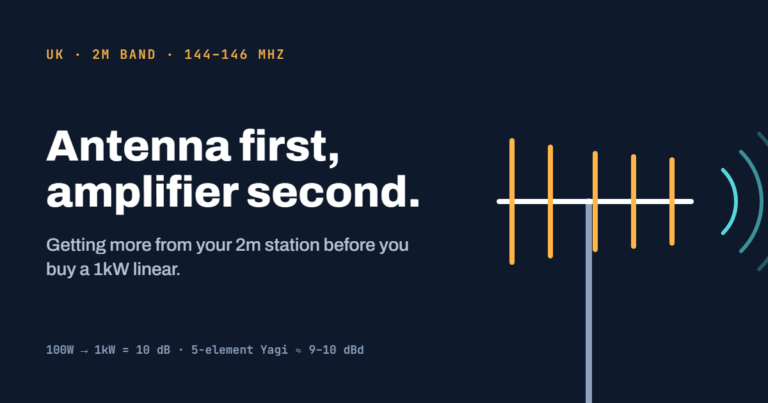
Operators often use high-gain Yagis, careful beam headings, and digital modes such as MSK144 or FT8 for weaker paths, contest permitting. The UK and European VHF contests, along with the ARRL VHF contests in North America, reward both technical preparation and operational flexibility.
Microwave Contesting – Precision and Perseverance
Microwave contesting (1.2 GHz and above) sits at the extreme end of the spectrum. Contacts are typically made over line-of-sight or slightly beyond, using highly directional dishes or horn antennas and carefully engineered equipment. Many operators build or modify their own gear because commercial options can be limited or expensive.
Challenges unique to microwave contesting include:
- Very high free-space path loss
- The need for precise frequency accuracy and stable oscillators
- Antenna alignment – even a few degrees can mean the difference between a solid contact and nothing
- Weather and atmospheric conditions affecting signal strength
- Portable operation from carefully chosen elevated sites
Despite the difficulties, microwave contesting has a dedicated following. The sense of achievement when completing a difficult contact on 10 GHz or higher is hard to match.
Getting Started and Improving
You don’t need a world-class station to enjoy contesting. Many operators start with a single-band entry on HF or a simple VHF setup from home or a local high spot. Logging software, online clusters, and club activity nights make it easier than ever to learn the ropes.
Whether your interest lies in long-haul HF DX, the tactical challenge of VHF, or the technical frontier of the microwaves, there is a contest format that will suit you. The bands are waiting — fire up the radio and get in the log.
73 and good luck in the next contest!


Leave a Reply
You must be logged in to post a comment.